
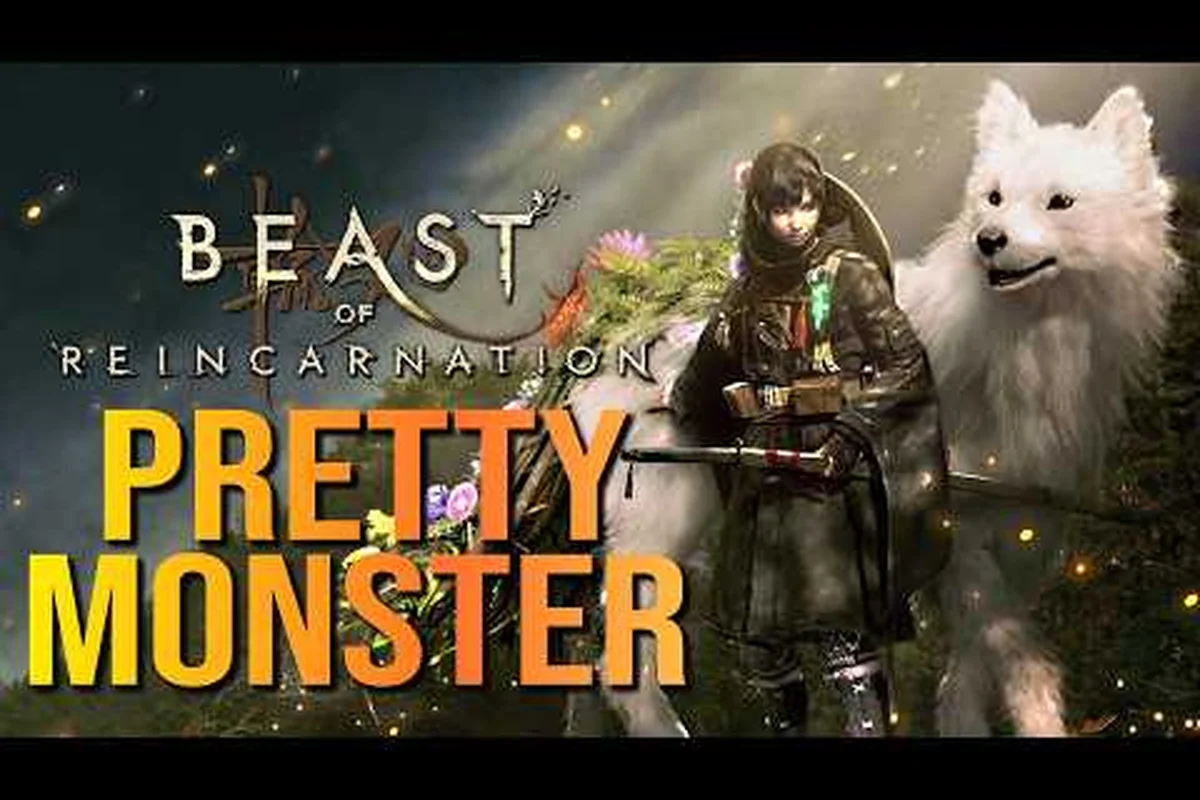
The final confrontation in the game is not just a test of skill, but the culmination of a tragic cycle that defines the entire Beast of Reincarnation final boss story. Understanding the narrative weight behind the boss transforms the encounter from a simple fight into a deeply emotional resolution, which is why we are exploring the core Beast of Reincarnation narrative themes without revealing specific spoilers.
The Beast of Reincarnation story revolves around a curse that binds souls to an endless loop of suffering, and the final boss is the physical manifestation of that curse. According to community reports, the game’s narrative draws heavily on themes of Buddhist philosophy, where breaking free from desire and attachment is the only path to peace. The Beast of Reincarnation Emma fate story is the emotional core of this narrative, as her journey directly challenges the cycle’s existence. This analysis will guide you through the symbolic meaning of the final encounter, the motivations driving the characters, and the profound themes that elevate the game beyond a simple action title.
Thematic Foundations of the Beast of Reincarnation Narrative
To understand the Beast of Reincarnation story analysis, we must first look at the world’s philosophical underpinnings. The narrative is built on a cycle of death and rebirth, where characters are trapped by their past actions. The game does not explicitly lecture on karma, but the mechanics of the curse make it clear that attachment to power or vengeance inevitably leads to corruption. This is a classic exploration of Beast of Reincarnation narrative themes, where the line between hunter and monster blurs with every reincarnation.
The world of the game is a distorted reflection of historical Japan, where yokai and corrupted humans are often indistinguishable. The curse doesn't just create monsters; it amplifies the negative emotions of those it touches, turning their greatest strengths into fatal flaws. This thematic depth is what makes the Beast of Reincarnation final boss story so compelling, because the final enemy is not just a beast but a mirror reflecting the protagonist's own potential for darkness. The game forces you to confront the question of whether breaking the cycle is truly possible, or if every victory simply restarts the clock on a new form of suffering.
The Cycle of Samsara and Karmic Debt
The game’s central curse functions very similarly to the concept of Samsara, the endless cycle of death and rebirth found in Eastern religions. Characters who die with intense emotional baggage are reborn as corrupted spirits, forced to relive their trauma until they are purified. This mechanic is central to the Beast of Reincarnation story analysis, because it explains why the world is filled with recurring boss fights and why certain characters seem to remember past encounters with you.
The karmic debt system is not just a plot device; it influences gameplay through the story’s progression. The more you rely on corrupted power, the more the world reacts to you with hostility, altering some narrative outcomes. This system reinforces the Beast of Reincarnation narrative themes by making the player complicit in the cycle of violence. You are not just an observer but an active participant, and your actions determine whether the cycle continues or finally breaks.
| Karmic Concept | Narrative Impact | Gameplay Reflection |
|---|---|---|
| Attachment | Leads to corrupted rebirth | Using certain weapons increases corruption meter |
| Suffering | Fuels the Beast's power | Bosses grow stronger with each death in a cycle |
| Purification | The only path to true ending | Requires non-lethal takedowns or specific items |
| Impermanence | All victories are temporary | The world state resets on death, retaining only knowledge |
The game’s narrative structure is a brilliant example of ludonarrative harmony, where the story and the mechanics reinforce each other. The Beast of Reincarnation Emma fate story is the most direct exploration of this, as her personal attachments directly fuel the final boss's power. Her struggle is not just to defeat an enemy but to let go of the very emotions that give her strength, creating a powerful internal conflict that defines the game's emotional landscape.
Unraveling the Beast of Reincarnation Emma Fate Story
The Beast of Reincarnation Emma fate story is the emotional anchor of the entire narrative. Emma is not just a companion; she is a living embodiment of the game's central themes of loss and redemption. Her fate is deeply intertwined with the final boss, and understanding her journey is essential for a complete Beast of Reincarnation story analysis. Her narrative is a delicate balance of hope and tragedy, and it serves as the primary lens through which the player experiences the curse's cruelty.
Emma's story is a masterclass in environmental storytelling and subtle dialogue. She is bound to the Beast in a way that is not immediately obvious, and the clues are scattered throughout item descriptions and optional conversations. The Beast of Reincarnation final boss story is, in many ways, the conclusion of her personal arc. The final confrontation is a direct result of her choices and the choices made by others who tried to save her, creating a complex web of cause and effect that spans multiple cycles of reincarnation.
The Shared Fate of Emma and the Beast
The connection between Emma and the final boss is symbiotic and tragic. The Beast is not simply a monster to be slain; it is a part of her, or she is a part of it. This duality is the core of the Beast of Reincarnation narrative themes. The game suggests that the Beast was born from a failed attempt to purify Emma’s curse, a ritual that went horribly wrong and created a separate entity that feeds on her will to live.
This shared fate creates a unique narrative tension. You cannot simply destroy the Beast without destroying a part of Emma, and you cannot save Emma without confronting the Beast on a spiritual level. This is the central conflict of the Beast of Reincarnation Emma fate story. The game challenges the player to look beyond the surface-level combat and understand the profound sadness that fuels the boss's rage, making the final battle a deeply emotional experience rather than a simple test of reflexes.
| Story Element | Emma's Role | The Beast's Role |
|---|---|---|
| Origin | A shrine maiden who broke a sacred vow | A manifestation of her karmic debt |
| Motivation | To find peace and end the cycle | To protect Emma by consuming all threats, including her |
| Core Conflict | Fear of being forgotten vs. desire for freedom | Hunger for her soul vs. a twisted form of love |
| Resolution | Acceptance of impermanence | Purification through non-attachment |
The narrative brilliance of this dynamic is that the Beast is not a villain in the traditional sense. It is a protector that has lost its way, a guardian angel twisted into a demon by centuries of suffering. This nuanced portrayal of the Beast of Reincarnation story analysis forces players to question the nature of good and evil within the game's world, making the final choice far more impactful than a simple boss fight.
Character Motivations in a Cycle of Sorrow
The characters in the game are not static heroes on a quest; they are prisoners of their own psychology, and their motivations are the gears that keep the cycle of sorrow turning. A deep Beast of Reincarnation story analysis reveals that every major character is driven by a specific form of attachment, whether it is love, duty, or vengeance. These attachments are the chains that bind them to the Beast's cycle, and the final boss story is the ultimate expression of these trapped desires.
The protagonist is not immune to this. The player's own drive to complete the game, to see the final boss fall, is mirrored in the protagonist's obsession. This meta-narrative layer is one of the most compelling Beast of Reincarnation narrative themes. The game asks you to consider if your own desire for completion is a form of attachment that perpetuates the cycle of violence, creating a powerful parallel between the player and the characters they control.
The Protagonist's Unspoken Obsession
The protagonist’s motivation is initially framed as a quest for purification or redemption, but the narrative slowly reveals a deeper, more obsessive drive. The Beast of Reincarnation final boss story is, in truth, a confrontation with the protagonist’s own shadow. The protagonist’s refusal to accept loss is what allows them to persist through death, but it is also what traps them in the cycle.
This is explored through the game’s unique death mechanic, where the protagonist is reborn with their memories intact. This is not just a gameplay convenience; it is a narrative curse. The protagonist remembers every death, every failure, and this accumulation of trauma is what fuels their desperate need to defeat the Beast. The Beast of Reincarnation Emma fate story is the catalyst that forces the protagonist to confront this, as Emma’s situation is a direct parallel to their own unacknowledged fear of moving on.
- The Vengeance Trap: The protagonist’s initial goal is often revenge, but the game shows this is a hollow victory that only deepens the curse.
- The Savior Complex: The desire to save Emma can become a possessive obsession, mirroring the Beast’s own twisted protection.
- The Fear of Oblivion: The protagonist’s true motivation is a fear of being forgotten, which is why they cling to their mission and their memories.
- The Path to Purification: The true ending requires the protagonist to let go of their own attachments, including their attachment to Emma, to finally break the cycle.
The narrative structure brilliantly uses the Beast of Reincarnation story analysis to show that the final boss is not an external enemy but the protagonist’s own inner demons given form. The Beast is a reflection of the protagonist's worst self, and defeating it requires a spiritual victory rather than a physical one. This psychological depth is what sets the game apart and makes the final confrontation so memorable.
The Evolution of Japan's Lore Through Multiple Playthroughs
One of the most innovative aspects of the game is how its lore evolves across multiple playthroughs, a key element of any Beast of Reincarnation story analysis. The world is not static; each new cycle reveals deeper layers of history, character relationships, and the true nature of the curse. This design brilliantly reinforces the Beast of Reincarnation narrative themes of impermanence and cyclical suffering, as the player's knowledge grows while the world resets.
The game’s version of historical Japan is a palimpsest, with each playthrough writing over the previous one while traces of the old story remain. The Beast of Reincarnation final boss story is not fully understood in a single run. You must piece together fragments of lore from different character perspectives and item descriptions that only appear under specific conditions. This encourages a deep engagement with the narrative, transforming the player into a historian of a world that is constantly dying and being reborn.
Unlocking Narrative Secrets in New Cycles
The game rewards curiosity and persistence with profound narrative payoffs. The Beast of Reincarnation Emma fate story is the most significant beneficiary of this system. In the first playthrough, her story seems like a straightforward tragedy. However, subsequent cycles reveal the intricate web of choices that led to her curse, including the role of other seemingly minor characters.
This layered storytelling is a masterclass in environmental and non-linear narrative. The Beast of Reincarnation story analysis reveals that the game’s world is a puzzle box of interconnected fates. A forgotten item found in a new location, a new dialogue option unlocked by a previous action, or a boss defeated in a different order can completely recontextualize the entire plot. This design ensures that the story remains fresh and engaging, even after hundreds of hours of play.
| Playthrough | New Lore Unlocked | Narrative Impact |
|---|---|---|
| 1st Cycle | Basic story of Emma and the Beast | Establishes the tragic surface narrative |
| 2nd Cycle | The Shrine Maiden's Vow | Reveals the origin of the curse and Emma's role |
| 3rd Cycle | The Failed Ritual | Explains the Beast's creation and its connection to Emma |
| 4th Cycle | The True Nature of the Protagonist | Unlocks the final dialogue options for the true ending |
This cyclical discovery process is not just a gameplay mechanic; it is the core of the Beast of Reincarnation narrative themes. The player, like the protagonist, must learn from past mistakes to achieve a better outcome. The game is a journey of enlightenment, where knowledge is the only permanent reward and the true final boss is the player's own ignorance. For more on how the game's mechanics support this narrative, you can explore the Beast of Reincarnation story spoilers free guide.
Frequently Asked Questions
What is the Beast of Reincarnation final boss story about?
The Beast of Reincarnation final boss story is about confronting the physical manifestation of a karmic curse that traps souls in a cycle of death and rebirth. The final boss is not just an enemy but a tragic entity born from a failed purification ritual, deeply connected to Emma's fate.
What are the main Beast of Reincarnation narrative themes?
The core Beast of Reincarnation narrative themes are the cycle of suffering, karmic debt, and liberation through non-attachment. The game explores how trauma and desire trap individuals in destructive patterns, and the final boss symbolizes the ultimate attachment that must be overcome.
How does the Beast of Reincarnation Emma fate story end?
The Beast of Reincarnation Emma fate story has multiple endings, but the true resolution involves helping her accept impermanence and let go of her attachments. Her fate is directly tied to the final boss, and saving her requires a spiritual victory rather than just a physical one.
Can I understand the Beast of Reincarnation story analysis without multiple playthroughs?
A surface-level understanding is possible in one playthrough, but a complete Beast of Reincarnation story analysis requires multiple cycles. The game’s lore is layered, and key narrative details about the final boss and Emma's past are only revealed through specific actions in New Game+.
Where can I find a Beast of Reincarnation story spoilers free guide?
This analysis is designed as a Beast of Reincarnation story spoilers free guide that explores the narrative themes and character motivations without revealing specific plot twists or endings. It focuses on the philosophical and emotional context of the final boss story.